
Lorem ipsum dolor sit amet, consectetur adipiscing elit. Ut elit tellus, luctus nec ullamcorper mattis, pulvinar dapibus leo.
Subsurface Safety Valve (SSSV)
A Subsurface Safety Valve (SSSV) is a downhole, fail-safe valve installed within the production tubing of an oil or gas well. It is designed to automatically shut off hydrocarbon flow in the event of abnormal conditions such as surface equipment failure, wellhead damage, or uncontrolled production.
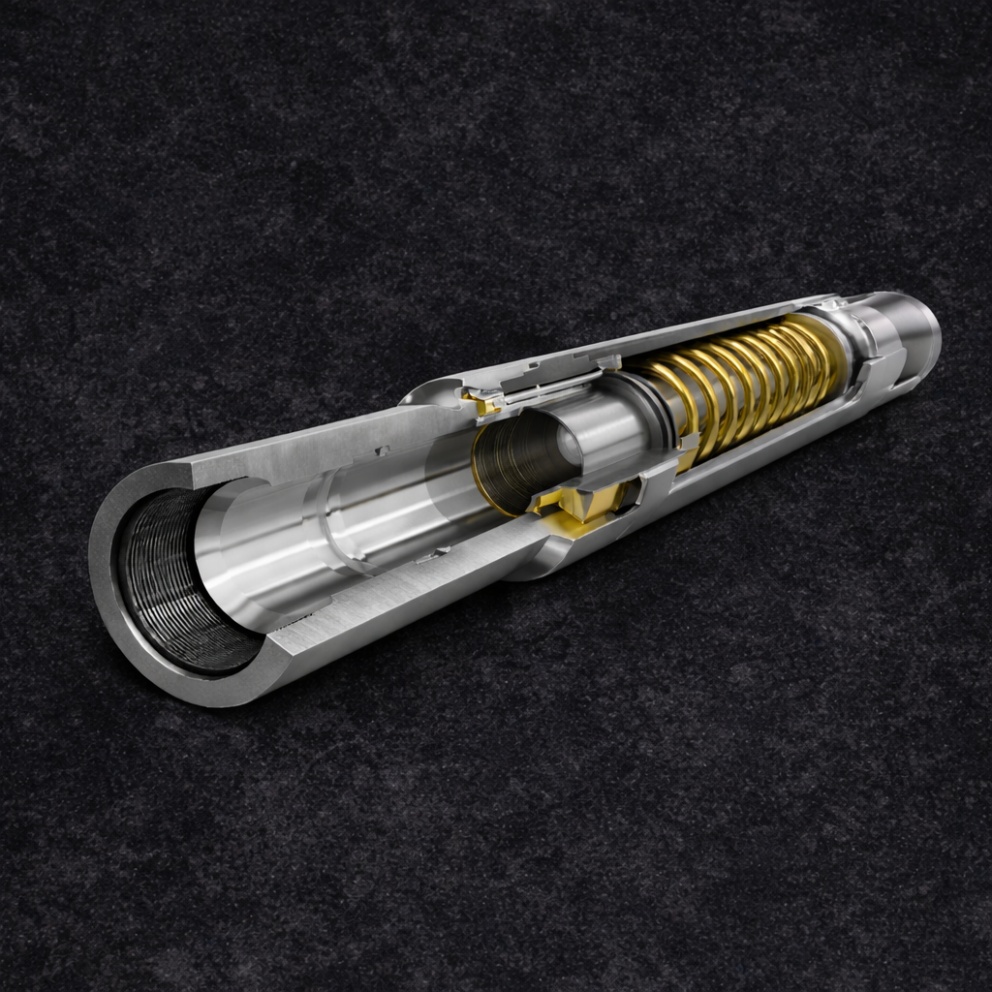
Tubing Retrievable Subsurface Safety Valve (TRSSSV)
Tubing Retrievable Safety Valves are self-equalizing, flapper-type safety valves designed to shut in a well at a point below the surface.
The safety valve is a surface-controlled subsurface safety valve (SCSSV) and is normally closed. It is held open by hydraulic control pressure and remains open as long as control-line pressure is maintained. When this pressure is exhausted or lost, the valve automatically closes to provide fail-safe well control.
Hydraulic control pressure is transmitted from a remote surface location through a control line to operate the valve.
These valves are value-engineered to deliver long-lasting, safe, and reliable performance in demanding well conditions.
Subsurface Safety Valves are widely used in:
- Offshore & Deepwater Wells (mandatory in most cases)
- Onshore Oil & Gas Production Wells
- High-Pressure / High-Temperature (HPHT) Wells
- Gas Wells and Gas Lift Systems
- Artificial Lift Systems (ESP, SRP, Plunger Lift)
- Environmentally Sensitive and High-Risk Locations
Reliable Well Control – Provides an effective downhole barrier against uncontrolled flow
Fail-Safe Operation – Automatically closes upon loss of hydraulic pressure
Enhanced Safety – Protects personnel, environment, and surface facilities
Prevention of Blowouts and Leaks
Improved Well Integrity and Longevity
Compliance with API and International Safety Standards
- Size: 2-3/8” ~ 7”
- Temperature: 20~400deg.F
- Working Pressure: 5~20kpsi
- Certified with API 14A
Wireline Retrievable Subsurface Safety Valve (WRSSV)
The Wireline Retrievable Subsurface Safety Valve (WRSSV) is a surface-controlled, fail-safe downhole safety device designed to protect oil and gas wells from uncontrolled flow. Installed in a landing nipple within the tubing string, the valve can be retrieved and reinstalled using wireline, eliminating the need for costly tubing retrieval.
WRSSVs are widely used in critical wells where operational flexibility, safety, and reduced intervention costs are essential.
WRSSVs are ideal for a wide range of well conditions, including:
- Offshore and subsea wells
- Deepwater and high-value assets
- High-pressure and high-temperature (HPHT) wells
- Gas wells and condensate wells
- Wells requiring frequent intervention or maintenance
- Artificial lift systems, including gas lift operations
- Wireline Retrievable Design
Enables installation and removal without pulling the tubing. - Fail-Safe Closure System
Automatically shuts in the well upon loss of hydraulic control pressure. - Surface-Controlled Operation
Operated via a hydraulic control line from the surface. - Flapper Valve Mechanism
Provides fast, reliable sealing against well pressure. - Landing Nipple Compatibility
Designed to lock securely into standard API nipple profiles. - Full Bore Configuration (Optional)
Allows smooth passage of wireline and intervention tools. - High-Integrity Materials
resistant alloys for harsh and sour environments.
- Reduced Intervention Costs
Eliminates the need for pulling tubing during maintenance or replacement. - Minimized Downtime
Faster retrieval and reinstallation improve operational efficiency. - Enhanced Safety
Immediate shutoff in emergency situations protects personnel and assets. - Operational Flexibility
Ideal for wells requiring frequent servicing or changing conditions. - Extended Equipment Life
Easy maintenance helps maximize valve lifespan. - Regulatory Compliance
Meets industry safety standards for well control systems.
- Size: 2-3/8” ~ 7”
- Temperature: 20~400deg.F
- Working Pressure: 5~20kpsi
- Certified with API 14A